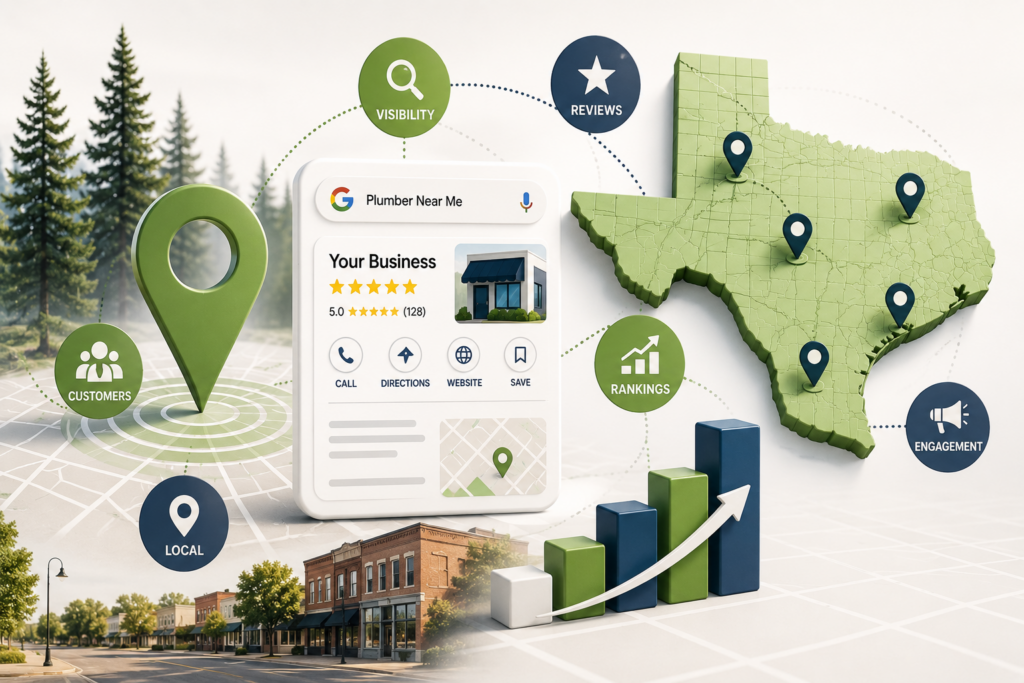
Blogging for local SEO is one of the cheapest ways a small business can climb Google, and most owners we talk to in Lufkin, Nacogdoches, and across East Texas don’t realize it. When we bring up blogging, the reaction is almost always the same: “I’m not a writer” or “I don’t have time for that.” We get it. You’re running a business, not a media company.
Here’s the thing: a blog isn’t really about writing. It’s about being found. Consistent, quality posts are one of the most effective local SEO tools available, and they cost nothing to create. Once your blog is live, here’s 5 ways to drive traffic to it.
Why Blogging for Local SEO Works, Not Just as a Creative Outlet
Every post you publish is a new page on your site, and every new page is another chance to rank for a term your customers actually search. A business with 30 posts on relevant local topics has 30 more shots at showing up in Google than one with a homepage, an about page, and a contact form.
Think about the questions you hear all day. “How much does a website cost?” “How long does SEO take?” “What should I look for in a digital marketing company?” Every one of those is a query someone is typing right now. If your site answers it well, Google can serve your page to that searcher. That’s free, targeted traffic from someone who already has the problem you solve.
Over time, blogging for local SEO builds what the pros call topical authority, Google’s recognition that your site is a reliable source on a subject. Google’s own guidance on helpful content rewards sites that show real depth. A Lufkin company with 20 posts on web design and SEO carries more weight than a five-page brochure site, however pretty that brochure is.
What Should Your Blogging for Local SEO Cover?
You don’t need original research or hot takes. You need useful, honest content that helps a local customer decide. Here’s a framework for blogging for local SEO that fits almost any business.
Answer the Questions You Get Asked Every Day
Every business has questions that come up constantly, before, during, and after the sale. Write a post that answers each one in full. A contractor might cover “How long does a roof replacement take?” An East Texas agency might cover “How long does SEO take to work?” or “What does a professional website cost?” Real customers search these, which is exactly what makes them strong topics.
Cover Local Topics and Events
Local content tells Google you’re an active part of your community. Write about events happening in East Texas, spotlight a client win, or cover a topic through your market’s lens. “How the 2025 business climate in Angelina County is affecting small business marketing” does far more for local SEO than a generic marketing post that could’ve been written anywhere.
Compare Options Your Customers Are Weighing
People researching a purchase search for comparisons. “DIY website vs. professional web design” or “Google Ads vs. SEO for local businesses” pull in high-intent readers who are actively deciding, and those are the visitors most likely to buy. Our post on what an SEO audit covers is this kind of content: it answers a question prospects have before they call.
Explain Your Process
Walk readers through what working with you is like. A post titled “What to expect when you hire a Lufkin web design company” ranks for local terms and builds trust with prospects who aren’t sure what they’re getting into. Transparency converts.
Address Common Mistakes Your Customers Make
“5 website mistakes costing East Texas small businesses customers” pulls in owners who see themselves in the problem, and it positions you as the expert who fixes it. Issues like NAP inconsistency and slow page speed are exactly the mistakes-your-customer-makes content that performs.
Blogging for Local SEO: How Often Should You Post?
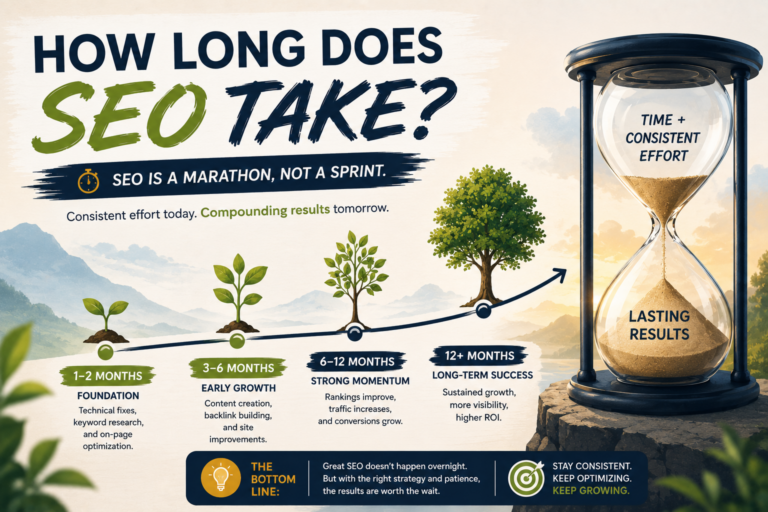
Consistency beats frequency. One well-written, properly optimized post a month will outperform five posts in a week followed by six months of silence. SEMrush research backs this up: a steady cadence matters more than volume. Pick a schedule you can actually keep, weekly, biweekly, or monthly, and hold it.
The posts also need substance. A 200-word post doesn’t give Google enough to evaluate. Aim for 600 to 800 words, covering the topic thoroughly enough that a reader walks away having learned something.
What If Writing Isn’t Your Thing?
That’s fine. Our blog management service handles content for SEO clients as part of ongoing campaigns, researched, optimized posts that target your local keywords and speak to your East Texas customers. A real post about blogging for local SEO for a Lufkin business is not the same as a national template with the city name swapped in, and that local specificity is what makes it work.
Whether you write it or we do, what matters is that it happens consistently, targets the right keywords, and genuinely answers what your customers ask.
The Easiest First Step
To see how blogging for local SEO fits a broader strategy for your business, start with a free SEO audit. We’ll show you where your site stands today, which keyword opportunities your competitors are capturing that you’re not, and how a content plan would speed up your local visibility.
It’s free, takes about 15 minutes to walk through together, and gives you a clear picture of what’s possible. Schedule your free consultation or call us in Lufkin.
Matt Massey
Matt Massey is the owner and lead developer at MasseyMedia. Matt earned a Bachelor’s in Business Management and another in Marketing from the University of Utah. Matt started MasseyMedia during college to pursue his college degree and has been growing the company for over 25+ years.
As a seasoned IT executive, I have spearheaded numerous transformative projects that have streamlined operations, enhanced organizational capabilities, and driven sustainable growth. My expertise spans designing and implementing robust web-based information systems, managing comprehensive IT functions, and leading diverse teams to deliver projects that exceed expectations.
At MasseyMedia, Inc., I have been the driving force behind over 400 successful website launches and numerous IT development projects. My approach integrates strategic planning with hands-on leadership to diversify product offerings and expand business horizons. From introducing advanced hosting solutions to integrating cutting-edge network infrastructure, my focus has always been on leveraging technology to solve complex business challenges.
My career is defined by a passion for technology, a commitment to excellence, and a relentless pursuit of innovative solutions that drive efficiency and competitiveness. I am eager to connect with like-minded professionals and organizations looking for a leader to transform their IT landscapes and guide them through the complexities of modern technology.